Reading Out Loud
Focused Elements:
You can have these explanations read out loud by clicking on 'Speak Explanation' (access key 'a')
These controls are to provide alternative means of accessing the information on this page. Two main facilities are provided: adjusting the text size and listening to the text on the page.
1) Adjusting Text Size:
You can increase the text size by clicking on 'Larger' (access key '+'), and reduce it by clicking on 'Smaller' (access key '-'). You can reset the size back to its original value by clicking on 'Reset' (access key 'j')
2) Listening to the Text
You can adjust the pitch of the spoken word, the rate or speed of delivery and the volume. You can also choose the voice to use by clicking on the drop-down list. The default voice is whatever is the standard for the computer and browser you are using.
To set your default, please refer to the description in the Accessibility Statement.
There are normally three sections of text on the page that you can listen to: the headings, the main text and a selection. Click on 'Speak Headings to speak the page headings (access key 'l'). Click on 'Speak Main Text' (access key 'q') to listen to the main text.
You can also select an area of text in the page using standard select methods and click on 'Speak Selection' (access key 'w') to read the selection aloud.
You can enable the reading out loud of the element that currently has focus by clicking on 'Start Focus Speaking' (access key 'f') and you can stop this by clicking on 'Stop Focus Speaking' (access key 'd').
You can pause the audio by clicking on 'Pause' (access key 'r') and resume by clicking on 'Resume' (access key 't').
To cancel or stop the audio click on 'Cancel' (access key 'y'). To restart the current audio from the beginning, click on 'Restart' (access key 'k').
To hide the accessibility controls click on 'Hide Panel' (access key 'h')
To hide this explanation click on 'Hide Explanation' (access key 'x')
Widecombe-in-the-Moor
Widecombe World War 1: The Flammenwerfer



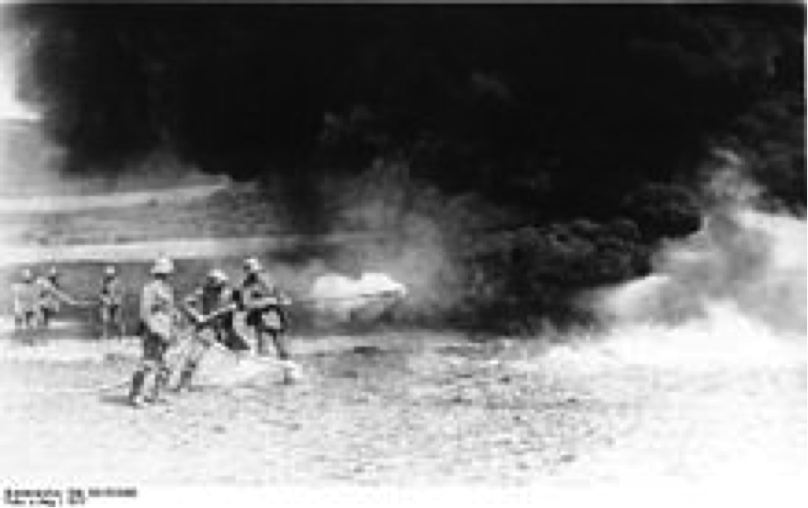
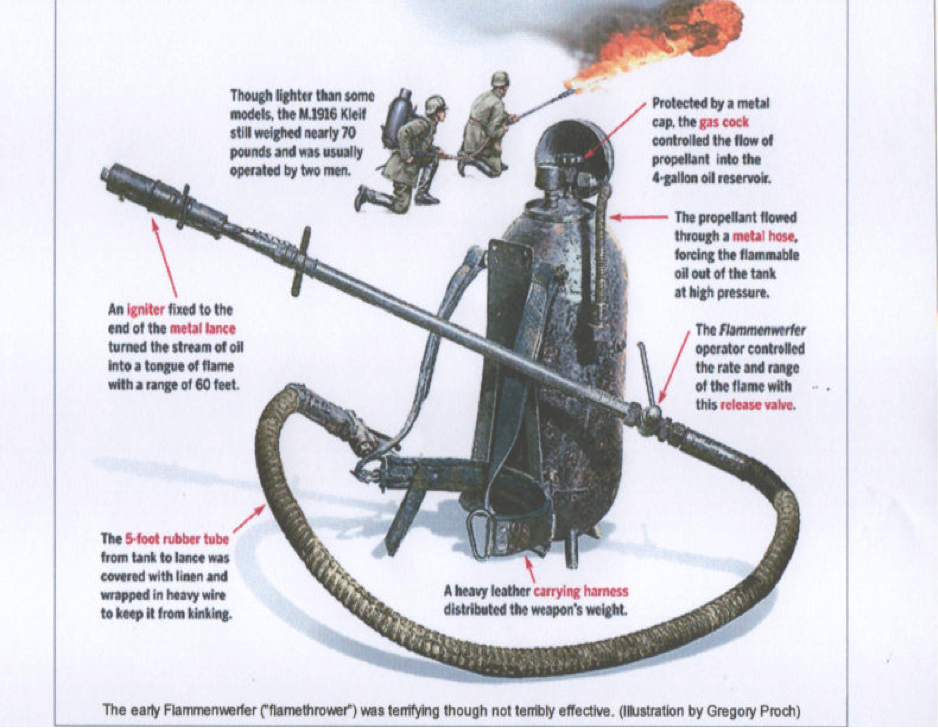
In Flanders, Belgium, on July 30, 1915, the Germans put their new weapon, the flammenwerfer, or flamethrower, to devastating use against the Allies at the Battle of Hooge.
The Battle of Hooge represented one of the first major employments of the flamethrower, one of the most feared weapons introduced during World War I. Eleven days before the battle, British infantry had captured the German-occupied village of Hooge, located near Ypres in Belgium, by detonating a large mine. Using the flamethrowers to great effect, along with machine guns, trench mortars and hand grenades, the Germans reclaimed their positions on July 30, 1915, penetrating enemy front lines with ease and pushing the British forces back to their second trench. Though few men were lost to actual burns, a British officer reported later, the weapons had a great demoralizing effect, and when added to the assault of the other powerful weapons, they proved mercilessly efficient at Hooge.
The information on this page was last modified on February 26 2024 17:07:23.